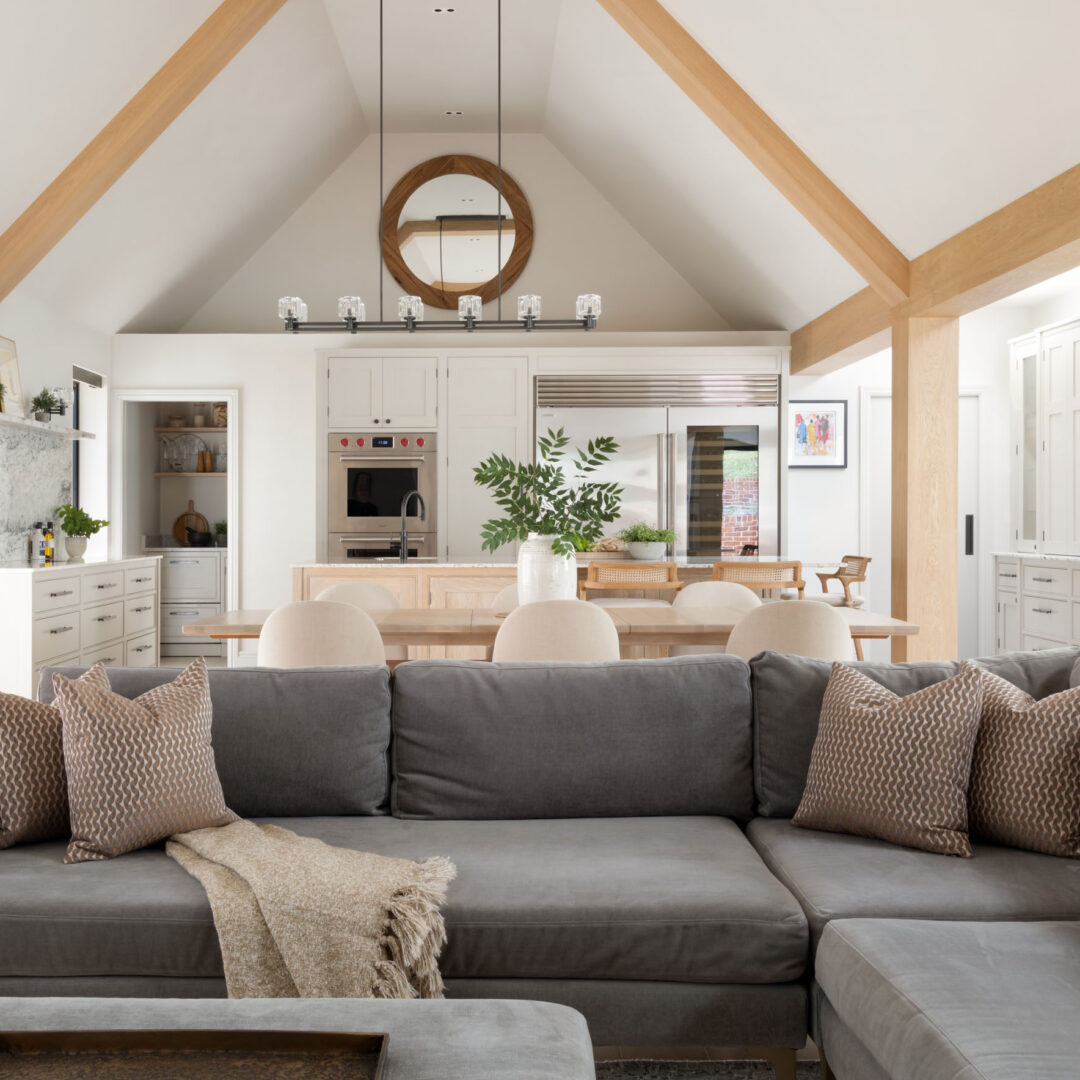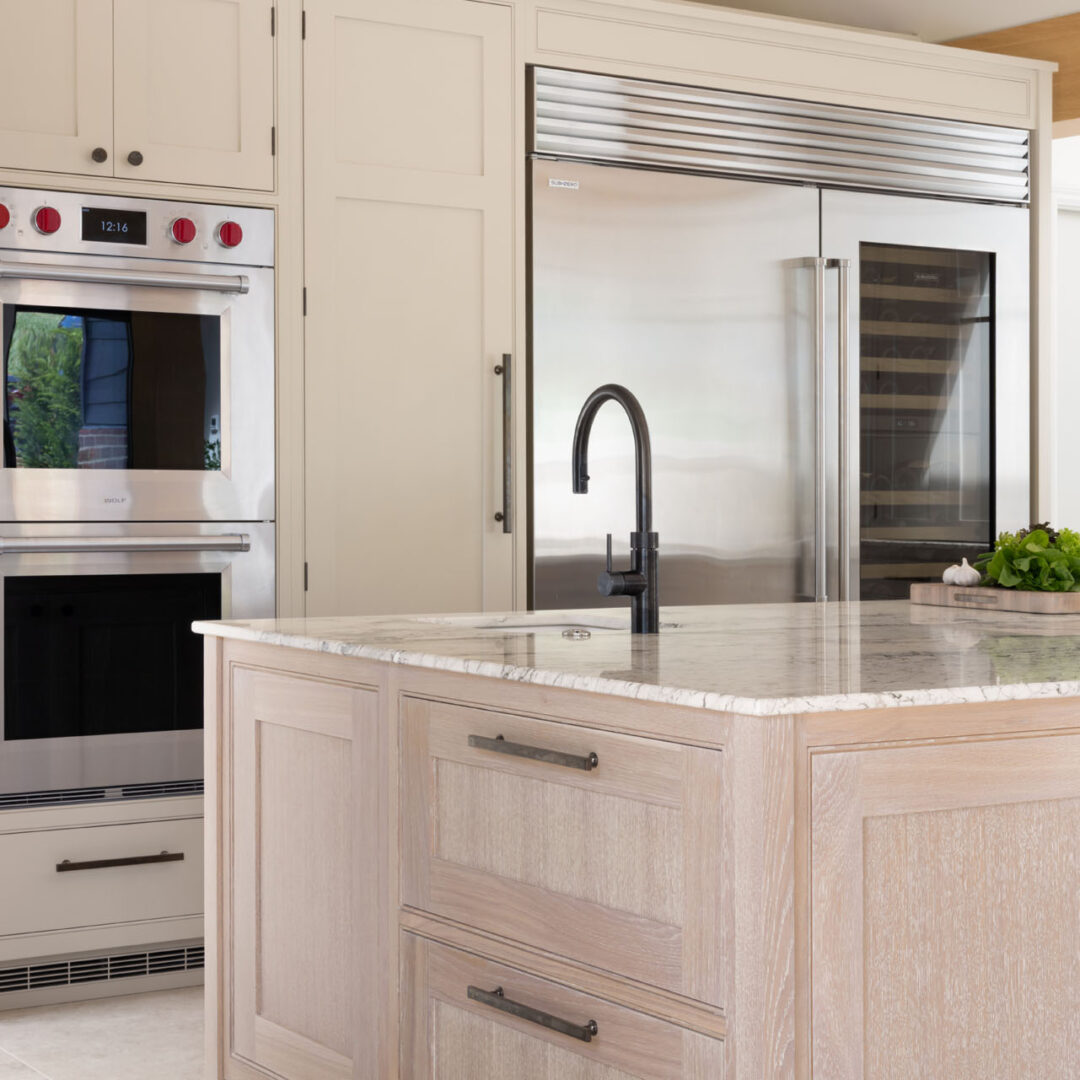


For decades, kitchen design relied on base units below and wall cupboards above. This was how almost every kitchen in Britain was planned, giving you plenty of storage. However, something has shifted in recent years, and clients have asked: “Do we actually need wall cupboards?” Designers across the industry are noticing it too, and the move away from upper cabinets is now one of the most talked-about kitchen trends heading into 2027.
At Planet Furniture, we’ve been designing bespoke handmade kitchens across Hertfordshire for years, and we’ve planned plenty without a single wall cupboard. So, if you love the idea of an open, airy kitchen but worry about where everything will go, this guide is for you.
Why Homeowners Are Saying Goodbye to Wall Cupboards
To begin with, it’s about how a kitchen feels and what we want from it. A full run of wall cupboards can make a room feel smaller and more enclosed, particularly in period cottages, Victorian terraces and the low-ceilinged extensions often seen around Hertfordshire towns. Take them away, and the room instantly opens up. Light travels further, sightlines stretch across the space, and the walls become a backdrop for colour, tiles and texture.
Secondly, it’s about personality. Without a wall of doors, a kitchen starts to feel lived in. Favourite ceramics, cookbooks, a pot of herbs and the copper pan you never put away all become part of the design. The kitchen now feels less like a fitted room and more like a home.
Finally, it’s about how we use our kitchens today. Reaching up into a deep wall cupboard is rarely convenient. Drawers, larders and pantries put everything at a comfortable height, which is why so many of our clients find they don’t miss their wall units at all.

The Golden Rule: Storage Doesn’t Disappear, It Moves
Here’s the secret. A kitchen without wall cupboards isn’t a kitchen with less storage. Instead, the storage moves somewhere more sensible. When we plan one of these kitchens, we look at everything a family owns and find it a better home. Typically, that means four things working together.
Floor-to-Ceiling Tall Runs
A bank of tall cabinetry does the heavy lifting that wall cupboards once did, only far more efficiently. Because it runs from floor-to-ceiling, there’s no wasted space above and no dusty cupboard tops to clean.
Tall runs also allow you to add the most perfect bespoke larder. With internal drawers, spice racks and pull-out trays, a single larder cupboard can swallow the contents of three or four wall units, and everything is visible at a glance.
Deep Drawers Instead of Base Cupboards
Once the wall units go, the base units need to work harder. That’s why we design most of our kitchens with deep, full-extension drawers rather than cupboards with shelves.
Drawers bring everything to you. Plates, bowls, pans and food storage tubs can all live below the worktop, so there’s no kneeling on the floor or reaching into dark corners. Moreover, a handmade drawer is a joy to use every day. We always make sure the interiors feel special.
Open Shelving That Works for Its Keep
Open shelving is the natural partner to a kitchen without wall cupboards. Nevertheless, it needs careful planning, because a shelf that’s too deep, too high or too flimsy quickly becomes a cluttered dumping ground.
When designing open shelving, we think about:
- Depth: shallow enough to keep things tidy, deep enough for plates and jars
- Height: within easy reach, so items are used rather than just admired
- Material: solid oak, walnut, marble or stone, matched to the rest of the kitchen
- Placement: near the sink or hob, so everyday items are where you need them
Pantries and Dressers
Finally, a walk-in pantry or freestanding dresser can absorb an enormous amount of storage, keeping the main kitchen beautifully clear.
If you’d like to explore this further, take a look at our guides to the walk-in pantry and the bespoke appliance garage.

Is a Kitchen Without Wall Cupboards Right For You?
Of course, like anything, it isn’t for everyone. Before you commit, it’s worth asking yourself a few honest questions.
Do you have space for a tall run or pantry? If the answer is yes, you can usually lose the wall cupboards without losing any storage.
Are you happy for some items to be on display? Open shelving looks wonderful when it’s curated, but it does need a little upkeep.
How do you cook? Keen cooks often love the openness, but they need storage close to the hob. Therefore, we may suggest a rail, a shallow shelf or a set of drawers right beside the cooking zone.
Where will the extraction go? Without wall units, your cooker hood becomes a feature in its own right. Alternatively, a downdraft or venting hob keeps the wall completely clear.
For smaller kitchens, we often recommend a middle ground. For example, you could keep one short run of wall cupboards on a single wall and leave the rest open. That way, you get the airy feel without sacrificing practicality.

Design Tips From Our Team
How do we make our kitchens a success:
- Plan your storage, listing out all your essentials
- Make the wall a feature with a splashback or bold paint colour
- Think about lighting, such as wall lights or LED lighting built into the shelves, to highlight the worktops
- Hide the clutter with an appliance garage
- Choose quality materials such as solid timber, natural stone and beautiful hardware
Designed Around the Way You Live
Ultimately, a kitchen without wall cupboards is about freedom. It’s about a room that feels open, personal and full of light, while still holding everything a busy family needs. Because every one of our kitchens is bespoke and handmade, we can design the storage around your home, your belongings and the way you cook.

Related blogs:
One of the Most-Requested Features: The Walk-In Pantry
Is a Bespoke Kitchen Worth the Investment? – House and Floor Plans
Are you thinking about a kitchen without wall cupboards? Book a showroom appointment or get in touch with the Planet Furniture team. We’d love to show you how a bespoke handmade kitchen can give you all the storage you need, without a single wall unit in sight.