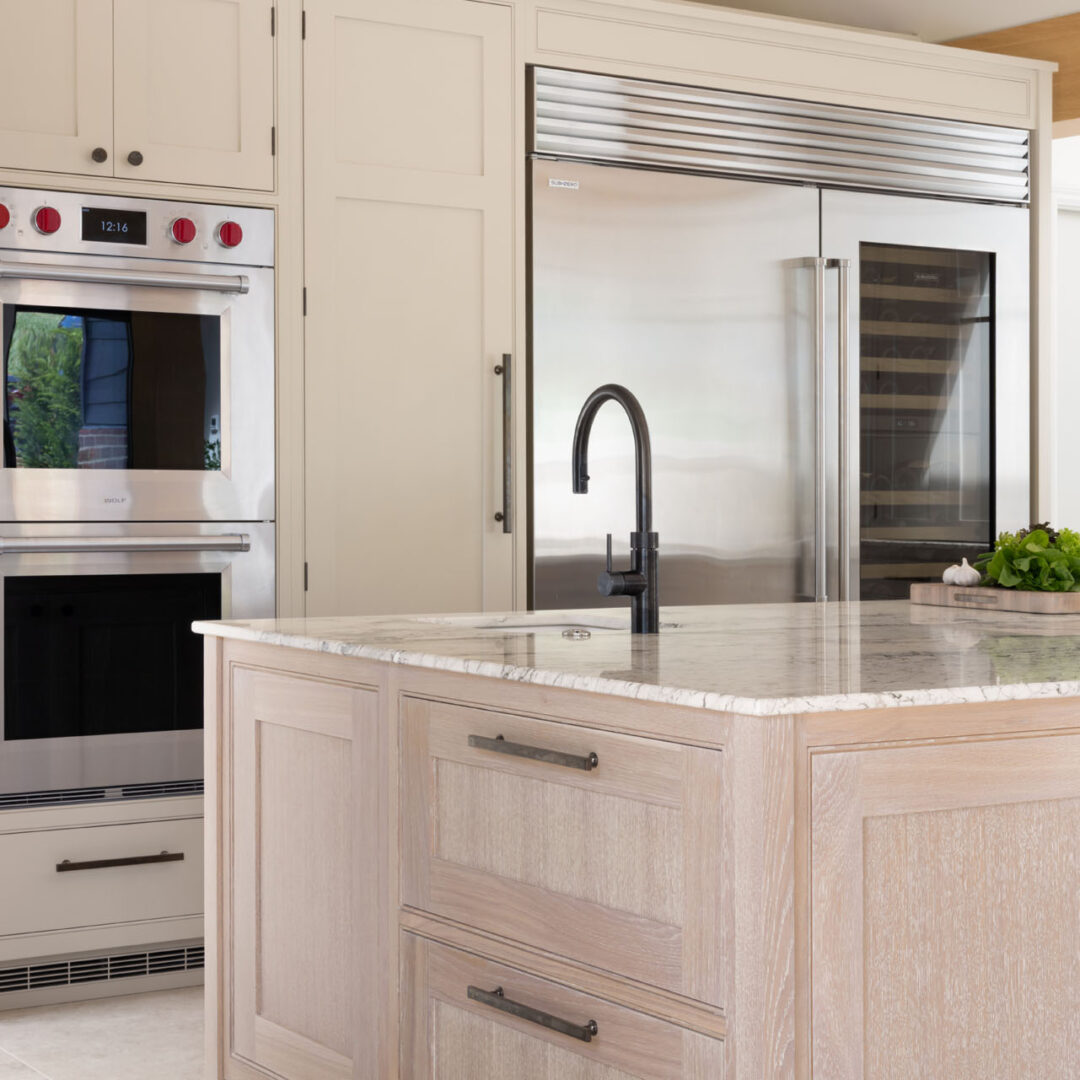


Fluting has become a kitchen detail that has risen quickly, as have ribbed and reeded. Each one is being introduced onto kitchen islands, cabinet doors, splashbacks, cooker hoods, bar fronts and even worktop edges. It’s a tactile, light-catching detail that adds instant texture and craftsmanship to a room, and it’s easy to see why so many homeowners fell for it.
But in 2026, the conversation has shifted to fully fluted kitchens, where surfaces are panelled in ribs and grooves. Designers’ advice is clear: use fluting as an accent on carefully chosen pieces, rather than covering every surface in it.
We couldn’t agree more, and the team at Planet Furniture loves designing reeded and fluted detailing into our kitchens. In our blog below, here’s what fluting and reeding really are, why less is more, and how to use them beautifully in a bespoke kitchen.
Fluting or Reeding: What’s the Difference?
These two words are often used interchangeably, but there is a difference worth knowing.
Fluting is a series of concave grooves cut into a surface, so the channels dip inwards. It comes from classical architecture, where columns were carved with long vertical flutes to catch the light and add elegance.
Reeding is the opposite: a series of convex, rounded ridges that stand out from the surface, a little like a bundle of reeds laid side by side.
Both details create rhythm, shadow and texture. Fluting tends to feel slightly more architectural and classical, while reeding can feel softer and more tactile. In kitchen design, both bring the same quality to a room: a sense of depth and craft that a flat surface simply can’t achieve.

Why Fluting Became Popular
Fluting has become popular for many reasons. It offers a way to add texture and interest without introducing colour or ornament. It catches natural light beautifully, throwing small, shifting shadows across a surface as the day moves on. It feels handmade and considered, and it bridges styles brilliantly, sitting just as comfortably in a contemporary handleless kitchen as in a classic shaker scheme.
The trouble is, this popular detail can easily be overused. When fluting covers every cabinet front, the island, the hood, and the splashback all at once, it stops being a feature and starts to feel busy. The very texture that makes it special becomes visual noise, and the room loses its sense of calm.
Why Less is More
The most beautiful fluted and reeded kitchens all share one quality: the detail is used with intention. It’s placed where it will be noticed, where it will catch the light, and where it adds something to the composition, rather than everywhere at once.
Used as an accent, fluting does three things brilliantly:
- It creates a focal point. When added to an island or cooker hood, the fluting draws the eye and gives the room a clear centre of attention.
- It adds contrast. If set against flat slab or shaker doors, a reeded panel stands out. When everything is fluted, nothing stands out.
- It slows the eye. Texture invites a closer look. Used sparingly, it encourages you to notice the craftsmanship in a room.

Where Fluting Works Best in a Kitchen
- The island – probably the most effective place for fluting or reeding. Wrapping the front or end panels of an island in reeded timber gives the room’s centrepiece real presence, while the rest of the kitchen stays calm.
- A statement cooker hood or canopy – a fluted hood can become a sculptural feature above the hob, particularly in a kitchen where the cabinetry is otherwise simple.
- A bar, dresser or media wall – reeded panelling behind open shelving, a television or a drinks dresser adds warmth and depth to a section of the room without affecting the main kitchen run.
- Selected drawer fronts or door panels – a single run of reeded drawer fronts, or a pair of fluted doors on a tall cabinet, can add rhythm without taking over.
- Small details – even a reeded edge to a shelf, a fluted plinth or a textured splashback section can bring subtle texture to a room.
Fluting Done Right at Our Projects
Gosmore Project
At our Gosmore project, the whole scheme was built around reeded oak, yet it never feels overdone. The kitchen is a calm, handleless flat slab design, hand-painted in Little Greene’s Slaked Lime Dark. The reeding appears in just a few carefully chosen places. The island’s front panel is wrapped in reeded oak veneer stained in Rubio Pure, giving the centrepiece of the room its texture and warmth. In the open-plan living space beyond, the same reeded oak forms the back panelling behind the television on the media wall.
Two moments of reeding, one fluting language, carried quietly through the whole project.

Radlett Project
At our Radlett project, the large space called for cabinetry that could hold its own without overwhelming the room. Our Lay-On Slim Shaker gave the kitchen structure and rhythm, and reeded details were added to parts of the design as a textured accent. As the light moves across the room, the reeding catches and releases it in small, quiet moments, gently slowing the eye.
Paired with tinted walnut and the soft tone of Rolling Fog Dark, the result feels rich and characterful, but never busy.

Tewin Project
At our Tewin project, the same principle applies, but with a different mood. Our clients had their eye on a black kitchen with an exposed wooden twist for their expansive space. They had seen many kitchens that caught their eye on Pinterest and in interior magazines, and loved the moody look the dark colour gave and the warmth from the wood. We hand-painted the cabinets in F&B Pitch Black. The real oak veneer cladding brings warmth and texture, and we even used F&B’s Pitch Black hue as a backdrop behind the timber so it stands out more.
The textured timber is used in one considered place rather than everywhere, and the contrast does the rest.
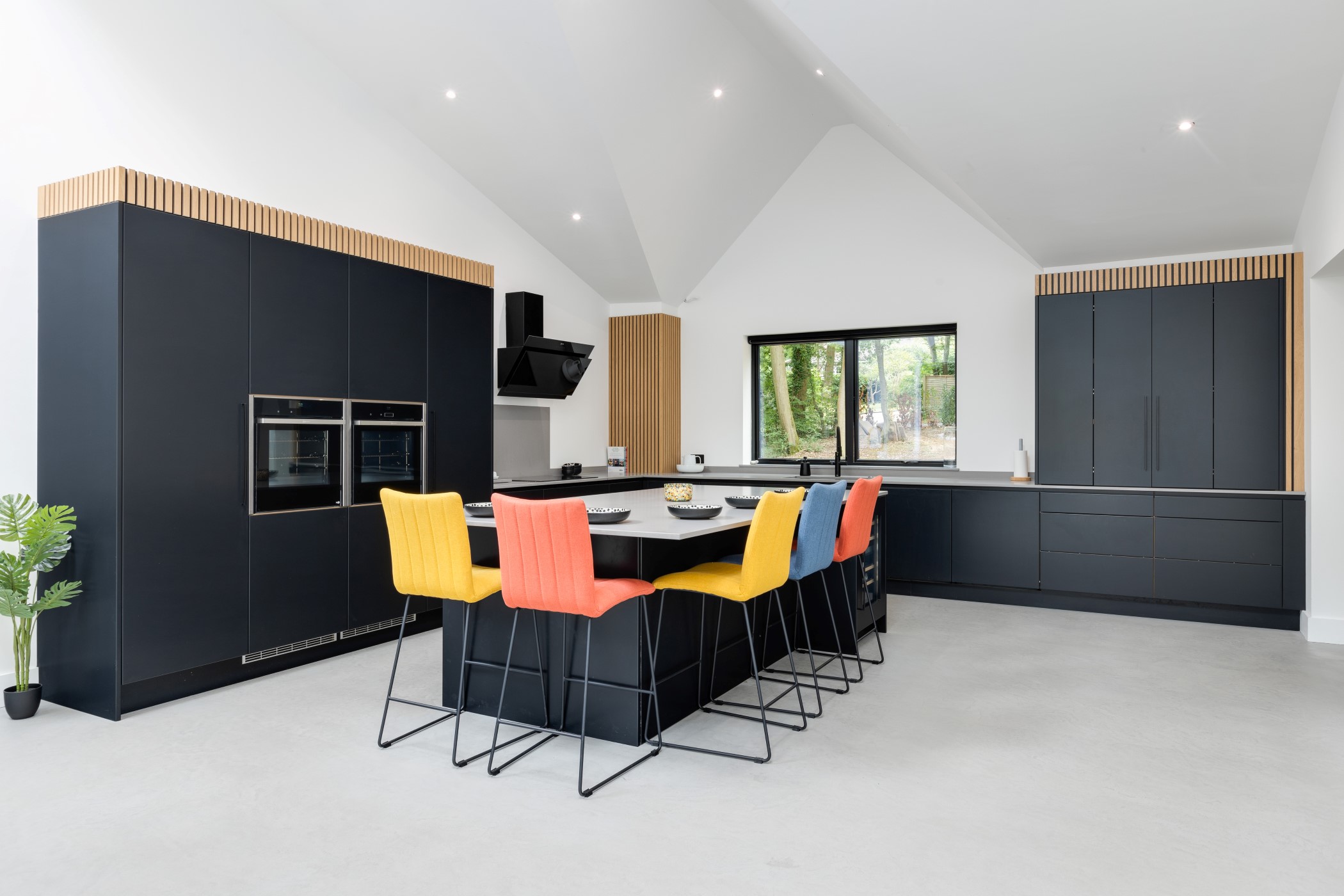
In all three cases, the fluting is a supporting detail rather than the whole story. That’s exactly why it works.
Getting the Details Right
If you’re considering fluting or reeding for your kitchen, think about the following:
- Decide where the detail will have the most impact, whether that’s the island, the hood or a feature wall, and let it shine there.
- Fluting comes alive when light falls across it, so position reeded panels where they’ll catch natural daylight. Or where integrated lighting can graze across them, making the texture sing.
- Make sure the width and depth of the flutes suit the size of the piece. Fine, narrow reeding feels delicate and refined, while wider flutes feel bolder and more architectural.
- Fluting looks its best next to simple, flat or gently detailed cabinetry. Slab doors, slim shaker profiles and plain painted finishes all give it room to breathe.
- Reeded timber, particularly oak and walnut, has natural warmth and grain that adds to the texture. Painted fluting can work beautifully too, especially in tonal schemes where the shadows do the work.

Related blogs:
Darker Woods are Back: Why Walnut is Replacing Light Oak
Spend More Time in Your Kitchen with a Space Designed Around You
Travel-Inspired Interiors: Bringing Your Favourite Destinations Home
Earthy, Calm & Organic Oak Kitchens
At Planet Furniture, every reeded and fluted detail is designed and made in our Hitchin workshop as part of a bespoke, handmade kitchen. That means the texture can be sized, positioned and finished exactly to suit your room, and it will sit in perfect harmony with the rest of the joinery.
If you love the look of fluting but want a kitchen that will still feel timeless in ten years, we’d love to help.